What vintage audio is actually worth
One-minute tells that separate valuable vintage receivers and turntables from the lookalikes: the flywheel test, the bounce test, and what condition matters.
Every estate sale has a stack of old stereo gear, and most of it really is worth the $10 on the sticker. The trick is that the valuable pieces look almost identical to the worthless ones: same walnut cases, same rows of knobs, same warm glow when they power up. The difference lives in a handful of physical tells you can check in under a minute, no price guide required.
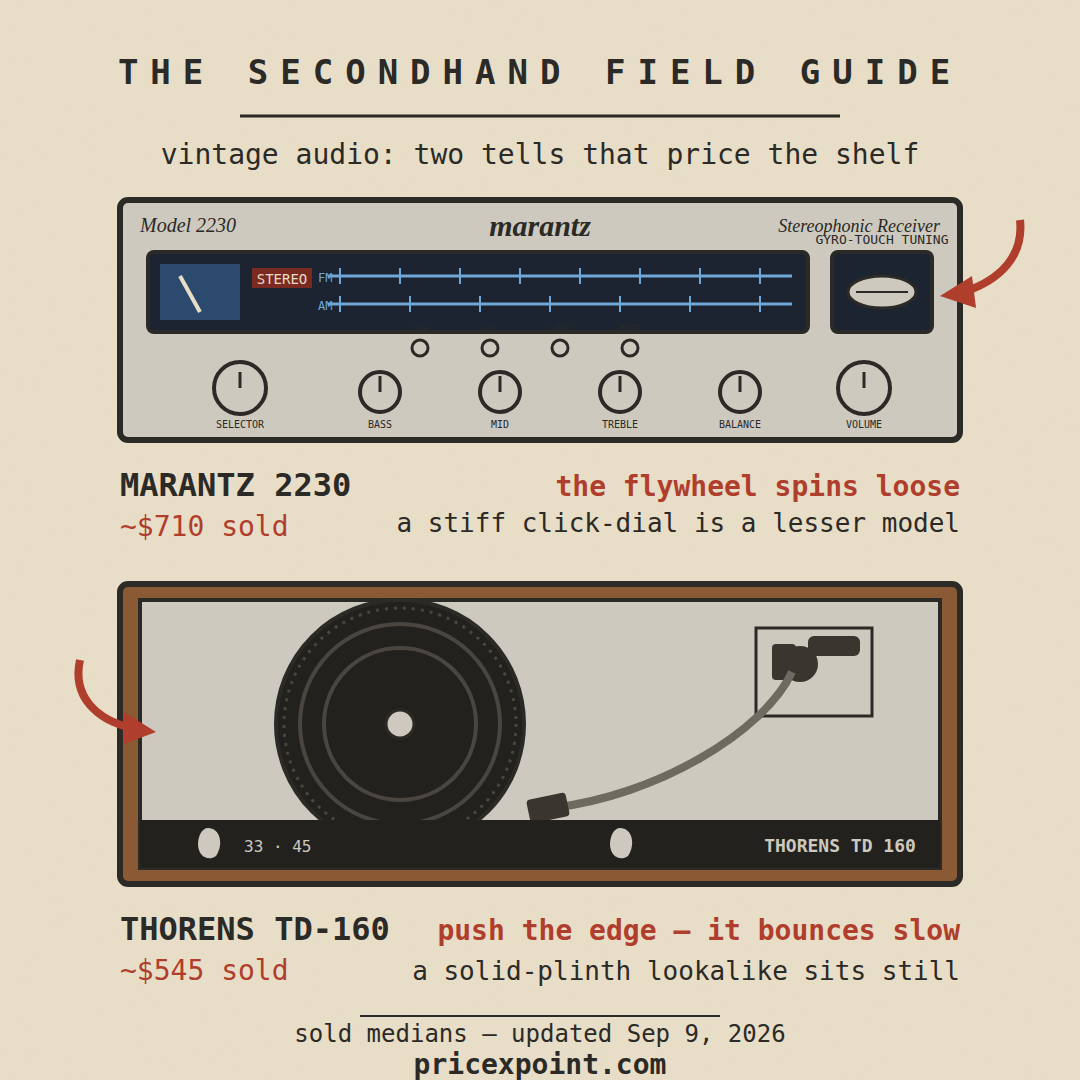
The flywheel test
Nineteen-seventies receivers from the golden brands, Marantz especially, used a tuning mechanism the brochures called gyro-touch: a heavy flywheel behind the tuning wheel that keeps spinning after you flick it, coasting the needle across the dial. Give the tuning wheel a spin. On the receivers collectors pay real money for, it turns loose and free and keeps gliding after your finger leaves. A dial that clicks, drags, or stops dead is usually a later or lesser model wearing the same wood case.
While you're at the faceplate, look for the details that mark the era worth having: a blue-lit dial glass, a signal meter that swings, and a machined metal tuning wheel with real weight to it. Plastic faceplates printed to look like brushed metal came later, and the market knows the difference even when the living room never did.
The bounce test
Turntables split the same way. The prized decks of that era (the Thorens TD-160 is the classic example) float the platter and tonearm on a sprung sub-chassis to isolate them from footsteps and speaker rumble. Press down gently on the platter edge. On a suspended deck the whole platter sinks and rises back slowly, like a car on good shocks. On the solid-plinth lookalike beside it, nothing moves at all.
That one bounce is often the difference between a deck that sells in the hundreds and one that sells for the price of lunch. The two can share the same wood plinth, the same dust cover, even the same tonearm shape. The suspension is invisible until you push.
Why this stuff gets walked past
Old receivers are heavy, they smell like attics, and most people assume anything with a needle and a dial belongs to the same junk pile as the clock radio next to it. That assumption is what leaves the good pieces on the table. The buyers who know spin the wheel and push the platter; everyone else lifts it once, feels the weight, and puts it back.
Weight, for what it's worth, is a real signal on receivers. The desirable models are heavy because their power supplies are heavy, and no one ever built a fake heavy receiver. A big walnut case that feels strangely light is usually exactly what it feels like.
Condition checks that actually matter
Some flaws are cheap fixes and some are deal-breakers, and they are not the ones you'd guess. Scratchy volume and balance knobs sound alarming and are usually a few dollars of contact cleaner. Burned-out dial lamps are routine replacements that every repair shop stocks. A missing dust cover on a turntable costs you some resale polish but not the sale itself. None of these should scare you off a piece that passes the tells above.
What should give you pause: a cracked case or faceplate, missing knobs on a model where replacements are unobtainable, a turntable missing its platter or headshell, and any sign someone has already been inside with a soldering iron and optimism. Power it on if the sale allows it. You want every channel playing through both speakers, even scratchily, and the dial lamps at least trying. Dead channels can be a five-dollar fix or a two-hundred-dollar one, and from the outside you cannot tell which you're buying.
Getting from the tell to a number
The tells sort the shelf into worth-checking and not, but the actual number moves with the exact model and its condition, and listings everywhere are full of hopeful asking prices that never sell. When a piece passes the flywheel or bounce test, check what that specific model has actually sold for (the approach in how to find out what your stuff is worth) before you commit at the register. Sellers who know what a working example brings routinely misjudge what an untested one is worth, in both directions, and that gap is where the good buys live.
Curious what yours is worth? See it from a single photo.
Take a picture to price it